Wild Refuges & Riparian Oases

Exploring the natural microclimates where groundwater springs, rocky limestone canyons, and warm coastal humidity allow Europe's only native palm groves to flourish.

Ecosystem Niches of Phoenix theophrasti

Although native to a semi-arid Mediterranean climatic zone characterized by 300 to 500 mm of erratic annual rainfall and extreme solar radiation, Phoenix theophrasti is strictly a phreatophyte. It cannot survive solely on atmospheric precipitation; rather, its deep root network taps directly into the alluvial water tables of seasonal stream beds (torrents), coastal gullies, and limestone fault springs.

Estimated Palms ~5,000 Clumps
Reserve Area 20 Hectares
Crete Region Lassithi (East)
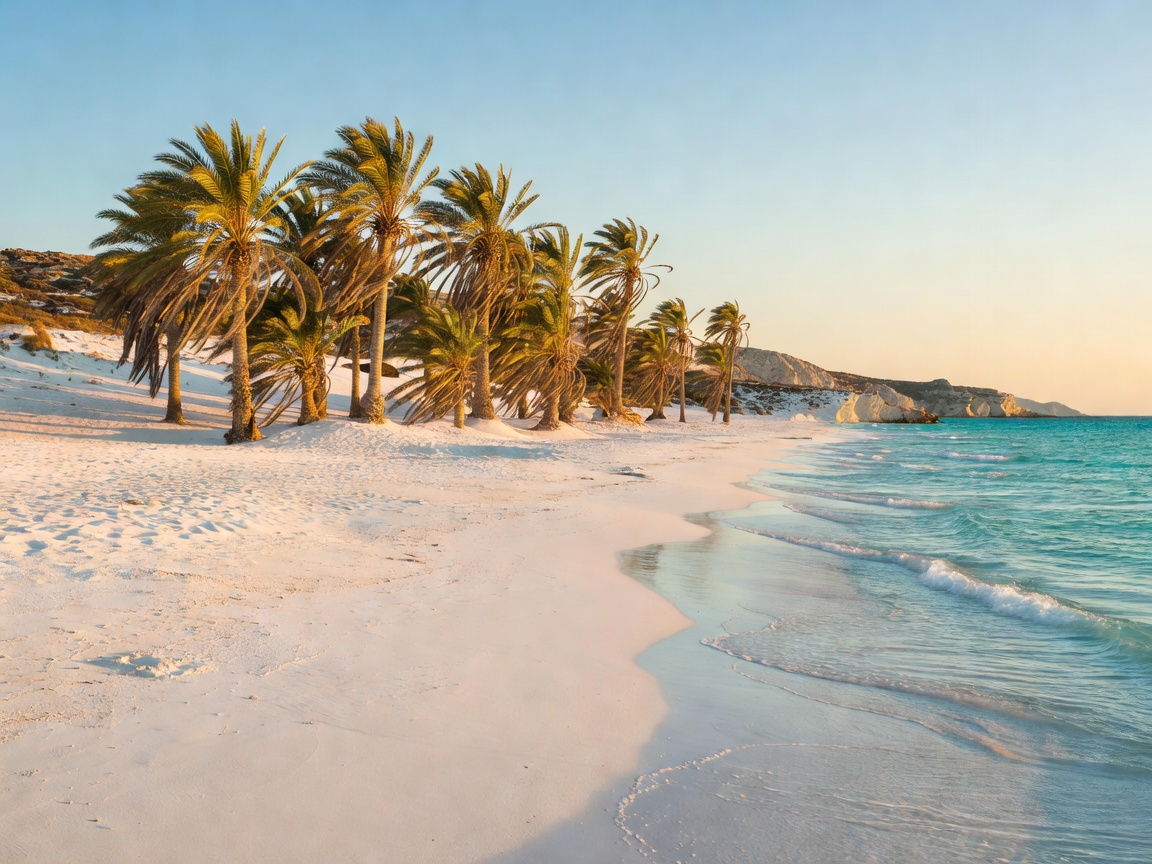
Vai Palm Beach along the eastern coast of Crete showing wild palm trees on white sand

Vai Palm Valley & Sandy Shoreline

The largest natural palm forest in Europe, occupying an alluvial depression where a seasonal stream meets the Aegean Sea. An underlying shallow freshwater lens perched above marine saltwater provides perennial root hydration for over 5,000 ancient palm clumps.
Estimated Palms ~1,200 Clumps
Topography Limestone Canyon
Crete Region Rethymno (South)
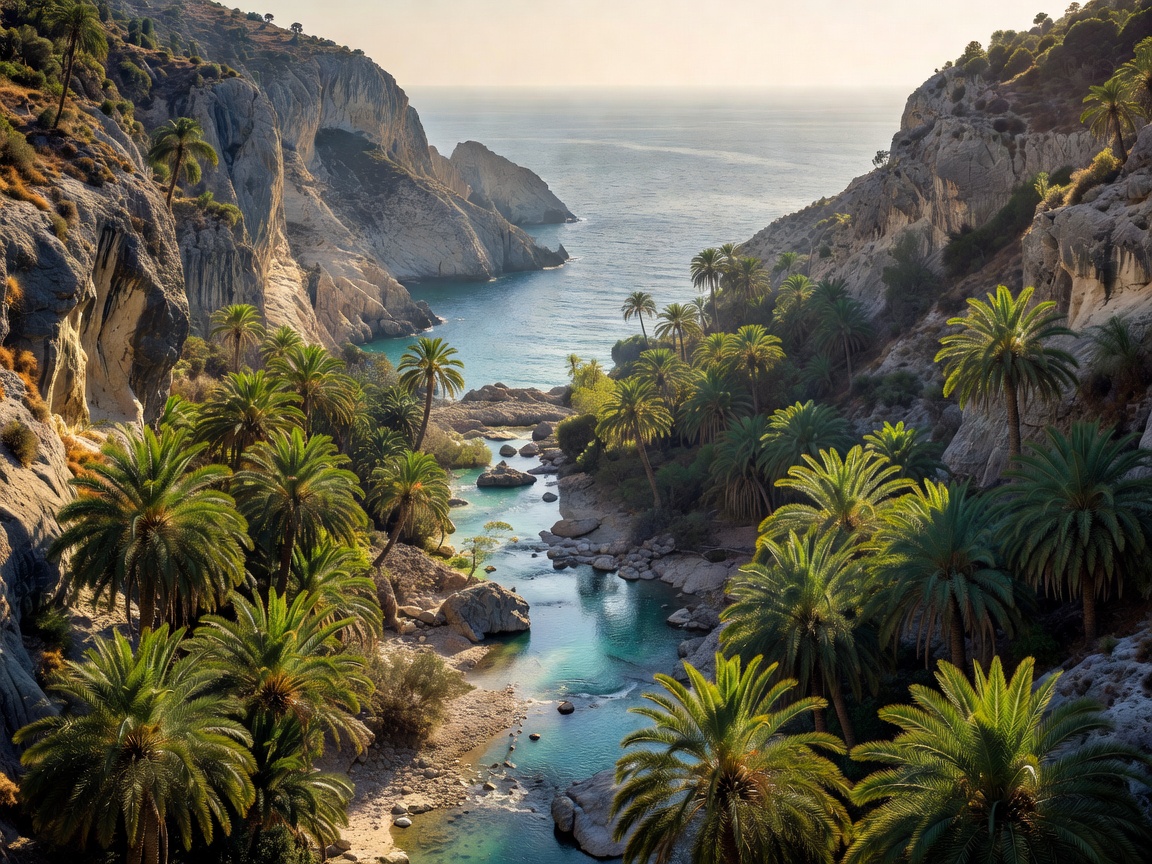
Preveli gorge river canyon lined with lush wild palm trees meeting the Libyan sea

Preveli Canyon & Megas Potamos

Located on Crete’s precipitous southern coast facing the Libyan Sea. The permanent mountain stream Megas Potamos cuts a 2.5-kilometer fissure through Jurassic limestone, providing cool canyon shade, high riparian humidity, and stable gravel banks.

Estimated Palms ~350 Clumps
Elevation 0 – 180 m
Crete Region Asterousia Range
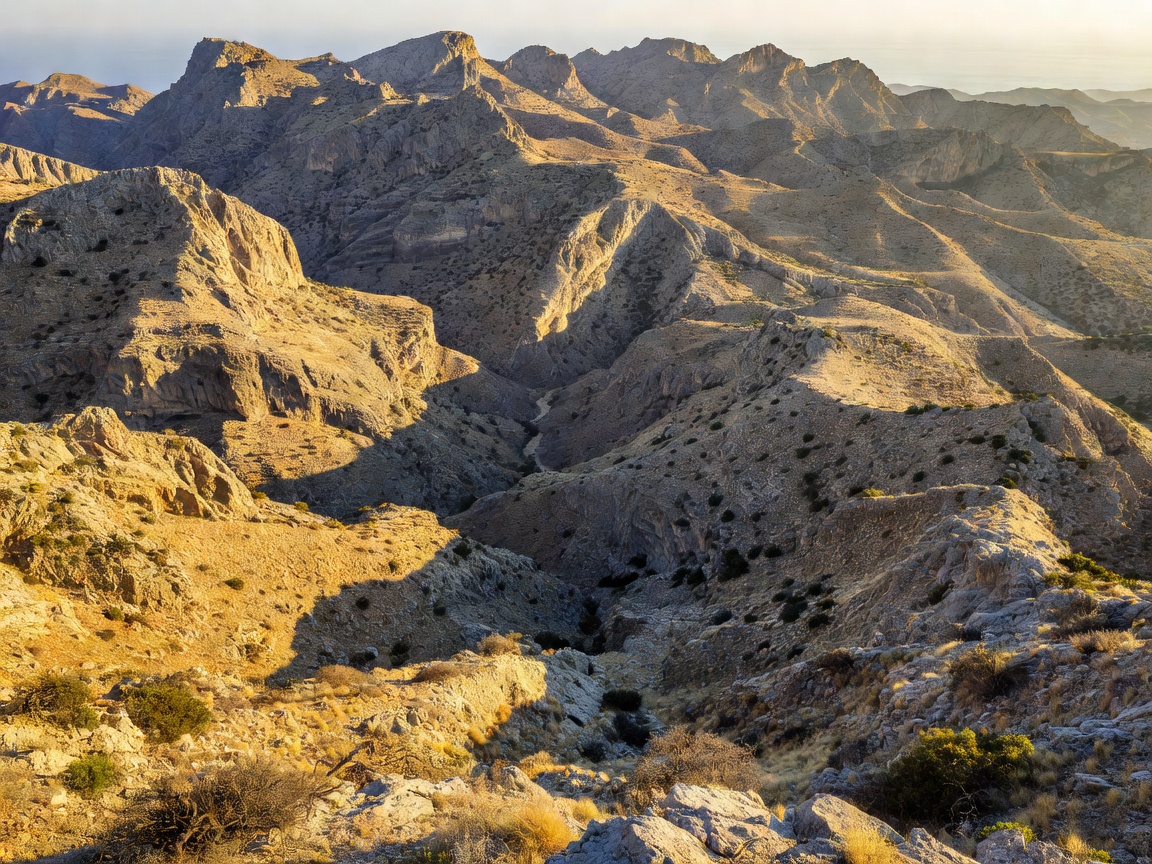
Rugged Asterousia mountains and isolated ravines in southern Crete

Agios Nikitas & Asterousia Ravines

Deep, hyper-arid cliff clefts near the isolated coastal monastery of Agios Nikitas. Here, palms endure intense thermal radiation by rooting in bedrock fault fissures where subterranean coastal condensation supplies essential trace moisture.

Estimated Palms ~400 Clumps
Location SW Turkey
Status Anatolian Enclave
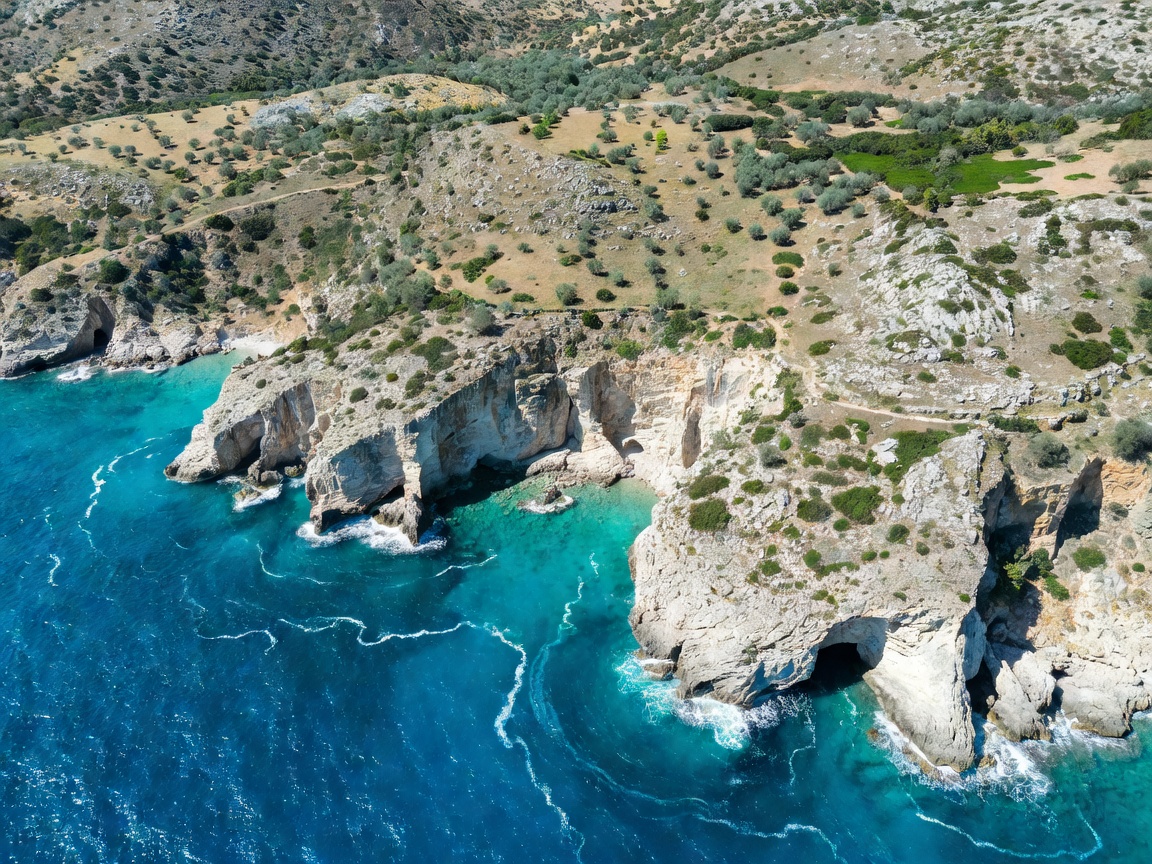
Coastal inlets and rocky hillsides of the Datca Peninsula in southwestern Turkey

Datça & Bodrum Peninsulas (Anatolia)

Disjunct Turkish mainland populations discovered at Hurmalıbük and Gölköy. These palms colonize steep volcanic ravines leading to sheltered bays, sustained by frost-free Aegean marine winds and permanent subterranean freshwater seepages.